
Qualified Trust Service Provider · eIDAS
Prove every document you issue came from you — and hasn’t changed since.
Rising document fraud, tighter regulation and cyber risk put your most important files under scrutiny. The electronic seal binds each PDF to your organisation and makes any later alteration immediately detectable.
- eIDASQualified seal & timestamp
- PAdESETSI EN 319 142 compliant
- REST APIOne call, sandbox included
Authenticity built into the documents you already issue
One API call seals a PDF in the name of your organisation and attaches a qualified timestamp. Nothing changes in how your teams work — the proof travels with the file.
Continuous and scalable service
A fixed monthly fee with no volume surprises, delivered through an API designed to drop into the systems you already run.
Fraud made visible
Sealing at the moment of issuance ties the file to its issuer. Any later edit, however small, breaks the seal and shows up in any standard PDF reader.
Shaped around your processes
A single centralised service, configured to match your document flows and your technical environment rather than forcing you to rebuild them.
Evidence you can produce on the spot
Structured, compliant evidentiary elements ready to hand over the moment an inspection, an audit or a dispute calls for them.
Flat-rate pricing, set by your volume
No per-seal metering and no surprise overage. You agree an annual package that matches the number of documents you issue, and the price holds.
From €500 / month, excl. VAT
Request a quote for your volumeIncluded in every package
- A qualified timestamp attached to every seal
- No setup fee and no cap on the number of users
- Annual packages sized for high document volumes
- Sandbox access, SDKs and full API documentation
- Customer support throughout integration and beyond
A corporate stamp, in cryptographic form
An electronic seal identifies the legal entity behind a document with certainty and proves the content has not moved since it was issued. Where an electronic signature binds a person, a seal binds your organisation.
Alter a sealed PDF by a single byte and the seal fails — which is what makes it hold up in a fraud investigation, an inspection or a court.
- Binds
- A legal entity, not an individual signatory
- Standard
- PAdES — ETSI EN 319 142, referenced by eIDAS
- Verified in
- Adobe Acrobat Reader and any PAdES-aware tool
-
1
Your application sends the file
A single REST call passes the PDF to the sealing service. No change to your existing workflow, no manual handling.
-
2
The seal and timestamp are applied
The document is sealed with your organisation’s certificate — or ours, as a trusted third party — and a qualified timestamp fixes a reliable date.
-
3
The sealed file comes back
You receive a sealed, timestamped PDF ready to circulate and retain, with its evidential value travelling inside the file itself.
Sealing that fits into the codebase you already have
A REST API, a sandbox and SDKs in the languages your team already writes. The integration is a request and a response — everything else stays where it is.
eIDAS-compliant in one call
A PDF is sealed to ETSI EN 319 142 (PAdES). Apply the seal in your own organisation’s name, or use ours as a trusted third party — we’ll walk your team through the certificate prerequisites, CSR included.
Less work for your technical team
Worked examples in several languages, so integration stays a business question rather than a cryptography project.
curl -X POST https://api.example.com/v1/seals \
  -H "Authorization: Bearer $API_KEY" \
  -H "Content-Type: multipart/form-data" \
  -F "document=@invoice-2026-0418.pdf" \
-F "timestamp=qualified"{
"status": "sealed",
"issuer": "CN=Your Organisation Ltd",
"sealed_at": "2026-04-18T09:14:07Z",
"digest": "sha256:4f9c…a71e"
}-
Sandbox
Validate the integration and surface blockers before you go live.

-
Documentation
Full reference for the API, the SDKs and every available option.

-
API status
Live availability and a record of every update to the service.

A corporate stamp, in cryptographic form
An electronic seal identifies the legal entity behind a document with certainty and proves the content has not moved since it was issued. Where an electronic signature binds a person, a seal binds your organisation.
Alter a sealed PDF by a single byte and the seal fails — which is what makes it hold up in a fraud investigation, an inspection or a court.
- Binds
- A legal entity, not an individual signatory
- Standard
- PAdES — ETSI EN 319 142, referenced by eIDAS
- Cryptography
- Keys held in a FIPS 140-3 Level 3 validated hardware security module NIST CMVP #0000
- Verified in
- Adobe Acrobat Reader and any PAdES-aware tool
-
1
Your application sends the file
A single REST call passes the PDF to the sealing service. No change to your existing workflow, no manual handling.
-
2
The seal and timestamp are applied
The document is sealed with your organisation’s certificate — or ours, as a trusted third party — and a qualified timestamp fixes a reliable date.
-
3
The sealed file comes back
You receive a sealed, timestamped PDF ready to circulate and retain, with its evidential value travelling inside the file itself.
Proof the recipient can see without asking you for it
Every PDF reader checks the seal the moment the file opens and states its verdict above the document. No plug-in, no portal, no phone call to confirm the file is the one you sent — the answer is already on screen.
-
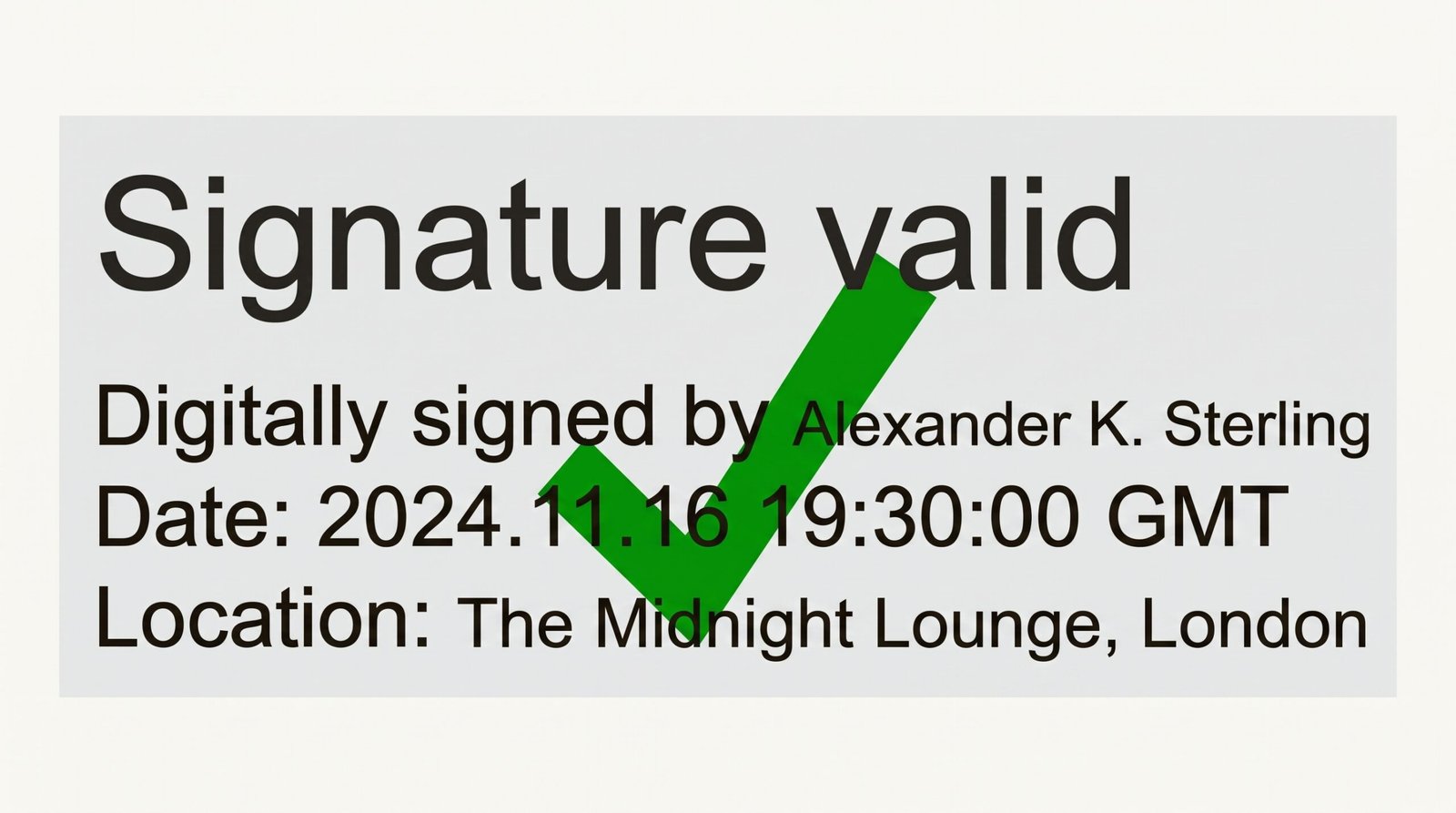
The issuer is named
The certificate identifies your organisation as legal entity, not an individual account. Whoever opens the file knows exactly who issued it.
-
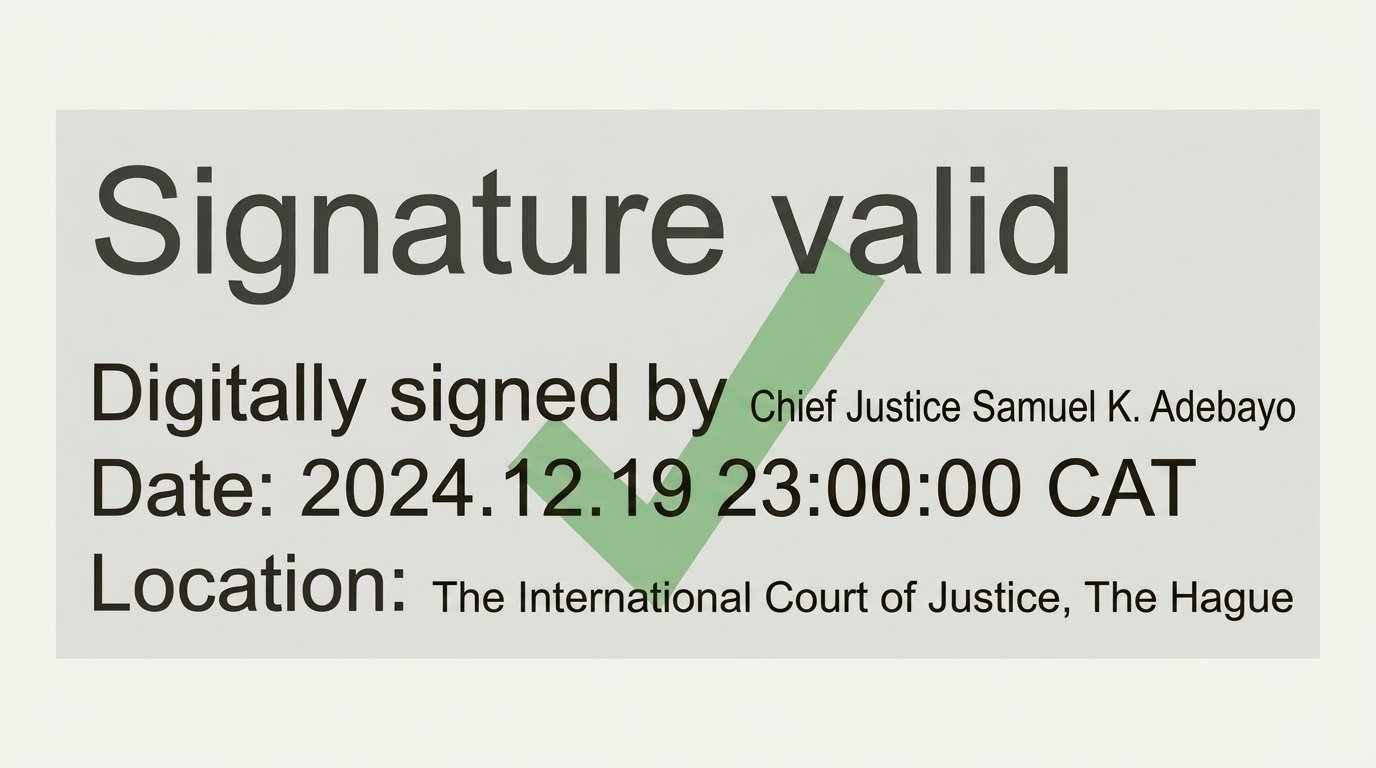
The content is intact
The reader compares the document in hand against the fingerprint fixed at issuance. Alter one byte and this verdict turns, visibly, on any machine.
-
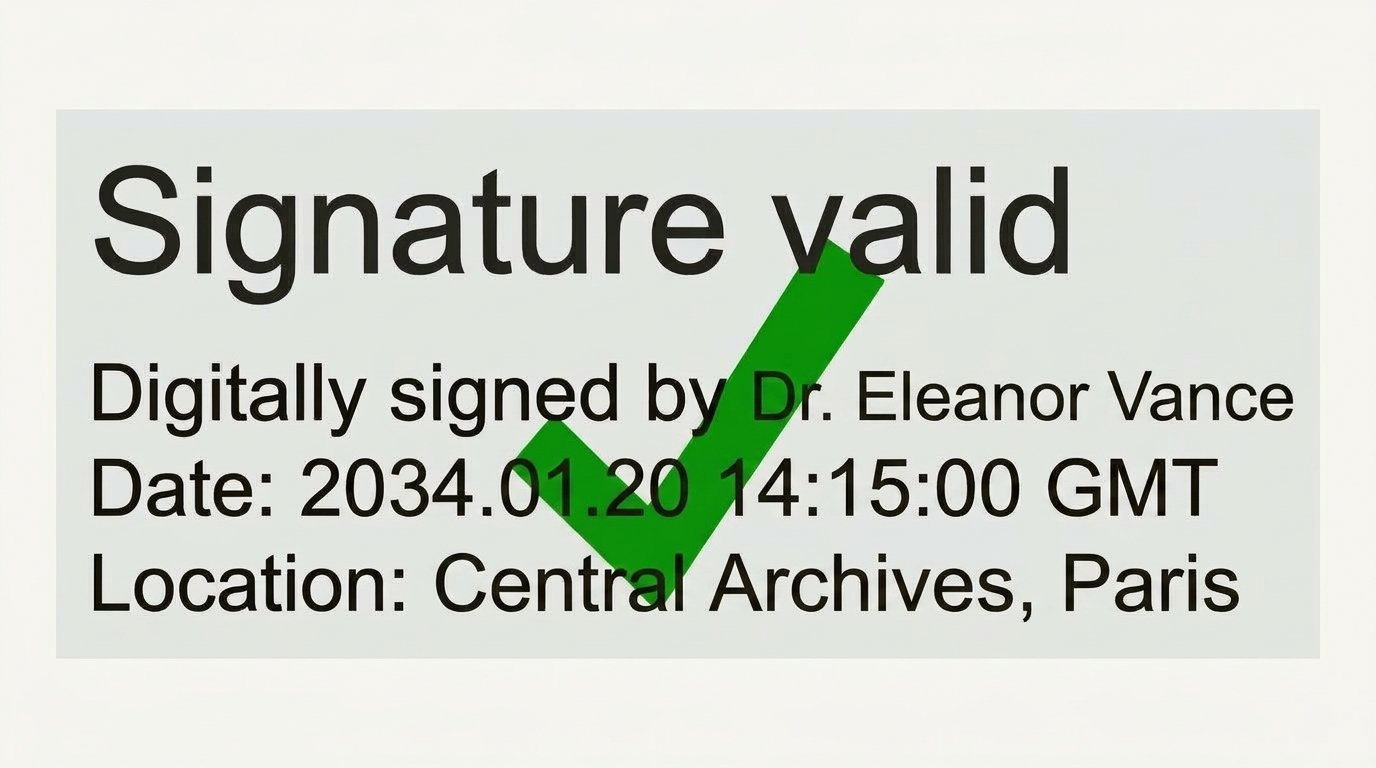
The date holds up
A qualified timestamp fixes when the document existed in that exact state — the detail that decides deadline and priority disputes.
Readers return this verdict only when the certificate chains back to a trusted authority. A self-signed or non-qualified seal shows as unverified instead, and the recipient is left deciding whether to trust you — the doubt you were removing in the first place.
Want your documents to hold up when they’re challenged?
Tell us what you issue and at what volume. We’ll map the sealing flow onto your existing systems and show you what the evidence looks like at the other end.
Questions we get asked
The legal and technical ground rules of electronic sealing, in plain terms.
What is an electronic seal?
A digital security mechanism that guarantees the origin and the integrity of a document issued by a legal entity. An electronic signature binds a natural person; a seal binds the organisation itself. Three levels exist — simple, advanced and qualified.
What are the three levels of electronic seal?
- Simple: basic identification, enough for low-sensitivity documents.
- Advanced: stricter identification, better traceability — suited to contracts and agreements.
- Qualified: strong identification and cryptography, issued by a QTSP. It carries a presumption of legal reliability and is the right level for regulated documents such as electronic invoices.
A qualified seal is recognised across the EU and cannot be refused as evidence.
How is a seal different from an electronic signature?
Both guarantee authenticity and integrity, but they attach to different actors. A signature is used by a natural person and expresses their consent. A seal is used by a legal entity and authenticates the document as coming from the organisation, without binding any individual. In short: a signature binds a person, a seal binds an organisation.
How does an electronic seal work technically?
- Hashing: the document is reduced to a unique digital fingerprint. Change one byte and the fingerprint changes.
- Sealing: that fingerprint is encrypted with a private key held under a certificate issued to your organisation, linking the file to its issuer.
- Verification: anyone with the public key can decrypt the fingerprint and compare it to the document in hand. A match means the file is authentic and untouched.
How do we obtain a qualified certificate?
Through a Qualified Trust Service Provider accredited by the relevant authority. The provider verifies your organisation’s legal identity, then issues the qualified certificate that underpins every seal you apply. We support you through the technical prerequisites, including generating the CSR.
How do we verify a seal on a received PDF?
- Open the PDF in a compatible reader such as Adobe Acrobat Reader. The seal appears in the signatures or certificates panel, with a clear valid or invalid verdict.
- Inspect the certificate: the entity named as issuer, the validity period and the chain of trust back to the certification authority.
- Check that the reader reports no modification since sealing. Any later edit, however marginal, shows the seal as invalid.
Which documents can we seal?
Any PDF where authenticity, integrity and legal validity matter — administrative records such as certificates and reports, legal documents such as contracts and minutes, and financial documents such as declarations, balance sheets and electronic invoices subject to regulatory archiving.
Is an electronic seal legally recognised?
Yes. A qualified seal compliant with the eIDAS Regulation is legally valid across the European Union. A sealed document carries the same weight as an official paper original and can be produced as evidence before courts in any EU member state.
How do we integrate sealing into existing processes?
Through our API, which seals documents inside your current workflows rather than replacing them. The sandbox lets you simulate the full sealing process on your own files before going live, so adoption stays fast and predictable.
Trusted by teams that can’t afford a disputed document





Sealed, signed, settled remotely
Three organisations that moved paperwork off paper without loosening a single evidential requirement.
-
Notarial practice
Harwell & Finch
Deeds of sale are now validated at a distance. Each instrument is sealed at the moment of execution, so parties in different countries sign against a document whose integrity nobody has to take on trust.
- Deeds sealed / year
- 4,200
-
Corporate legal
Calder Trust Advisors
Every contract leaving the firm carries a qualified seal and timestamp. Clients verify origin and integrity in Acrobat Reader, which ended the round of certified copies that used to follow each signature.
- Turnaround reduced by
- 63%
-
Probate & estates
Brightmoor Registry
Inheritance files move between heirs, banks and registries untouched. A broken seal is visible immediately, which settled two contested estates before either reached a hearing.
- Documents in circulation
- 18,500